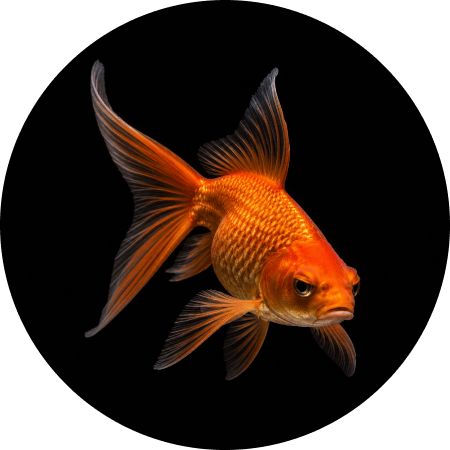
Attention Isn’t the Problem
On signal collapse, fluid trust, and why looking at anything now begins with an audit.
/* Working in performance marketing has a peculiar side effect. You know why the button is there, why that sentence appears before it, why the timer is red, why one testimonial was placed above another, and why there is always only one item left in stock or one room still available.
It is useful knowledge.
It has also made buying almost anything unnecessarily complicated.
My attention is fine.
My trust has sustained some damage. */
Table of Contents:
1 The Invisible Fee
2 Goldfish Was Innocent
3 Doctor’s Unreadable Handwriting
4 The Small Print
5 The Wolf Arrived Too Late
6 Scheduled Spontaneity
7 Throne Must Be Stored Somewhere
8 Cave Is Not Caving
9 A Filter for the Filter
10 The Endless Footnote
11 Mercurial Trust
12 Reality, Pending Verification
The Invisible Fee
There is a particular kind of exhaustion that arrives after spending twenty minutes trying to determine whether something is real.
Not whether it is true. That is a different and much older problem.
Whether the photograph was generated. Whether the review was written by a person. Whether the person exists. Whether the outrage is spontaneous or scheduled. Whether the credentials were earned or assembled. Whether the recommendation is sincere, sponsored, or sincere because it was sponsored.
A photograph appears, and before looking at what it contains, you inspect the hands.
Then the shadows.
Then the account that posted it.
Then the date the account was created.
Twenty minutes later, you have given the photograph your full attention.
You have simply given none of it to the photograph.
The attention did not disappear.
It moved backstage.
Goldfish Was Innocent
Somewhere in the last decade, a diagnosis became common knowledge: people could no longer pay attention.
Screens had shortened the span. Algorithms had trained the brain towards novelty. Content had to become faster, smaller and louder because the average human could now focus for only eight seconds—one second less than a goldfish.
The famous comparison appeared in a 2015 Microsoft Canada report: eight seconds for humans, nine for goldfish.
But those figures were not findings from Microsoft’s own research. They appeared in an infographic attributed to an external statistics website. Microsoft’s actual study examined how digital habits affected different kinds of attention and reached a more complicated conclusion: frequent multi-screen use could make people more distractible, but also better at switching focus and processing information quickly.
The neat countdown was not the study’s conclusion.
It was simply the part everyone remembered.
It was an excellent statistic.
Simple. Humiliating. Visual. Usable.
It appeared in presentations, articles, conference talks and marketing briefs. It explained everything while requiring almost nothing to be explained. An unsupported claim about our inability to pay attention became one of the most repeated ‘fun facts’ about attention.
The goldfish was dragged into this without evidence.
Goldfish, meanwhile, can learn tasks, respond to environmental cues and retain learnt associations. There is no meaningful universal stopwatch measuring ‘the attention span of a goldfish’, any more than there is one measuring human attention across every possible activity.
Both species were simplified to make the headline work.
And the headline worked extremely well.
It survived because almost nobody examined it closely.
The myth was simply useful.
As a tool and as an excuse.
Doctor’s Unreadable Handwriting
Once the (mis)diagnosis had been accepted, an industry reorganised itself around it.
Make it shorter.
Make it faster.
Remove the pause.
Start with the conclusion.
Place the hook before the person has time to leave.
Then place another one before the first wears off.
The content became shorter, but there was more of it. The messages became simpler, while the systems delivering them grew more sophisticated. Every surface learnt to compete for the same supposedly vanishing resource.
And yet something kept not adding up.
People binge a series for eight hours.
They read novels long enough to require maps, family trees and the occasional emotional recovery period.
They follow a sporting event that stops, restarts, wanders into analysis, and returns to the field — with full emotional investment and a few meltdowns included.
They spend an afternoon learning about an obscure historical dispute because one harmless link led to another.
They listen to three-hour conversations between people they had never heard of before pressing play.
They spend hours watching other people play video games.
These are not the behaviours of a species whose attention expires after eight seconds.
Of course, attention can be disrupted. Habits change. Interfaces shape behaviour. Constant switching has costs. Endless feeds, variable rewards and the small dopamine loops built around checking what comes next can make distraction easier to practise.
Not every complaint about fragmented concentration is imaginary.
Studies have also associated heavy media multitasking with greater distractibility and weaker performance in some attention and working-memory tasks.
Recognising those effects does not make one universal attention-span countdown meaningful, nor does it explain every quick departure from an encounter.
But the popular diagnosis that places too much weight on attention may be collapsing several different behaviours into one.
A person leaving quickly may be distracted.
They may also be bored.
They may have recognised the sales mechanism.
They may have seen the same promise seventeen times in a different coat.
Or they may have decided, almost instantly, that the source had not earned another minute.
From the outside, all of these look the same.
The person left.
The metric records the departure but not the judgement that caused it.
Perhaps at least some of what looks like lost attention is something else:
accelerated trust assessment.
The three-second rule may not be a law of human attention.
It may simply describe how quickly people have learnt to decide whether an encounter deserves to continue.
The Small Print
Attention is not the first transaction.
Before sustained attention comes a quieter decision: whether the object deserves further investment.
We look without trust all the time. We can watch something we know is staged. We can read lies out of curiosity. We can stare at a magic trick while trying to understand how it works.
Distrust can be remarkably attentive.
But attention without trust remains provisional. It hovers near the exit.
Trust is what allows attention to stop checking the doors.
The sociologist Niklas Luhmann described trust as a way of reducing social complexity. The world contains more possibilities, motives and risks than anyone could calculate before acting, so trust allows some of them to be temporarily set aside.
For most of daily life, we do not verify everything from first principles.
We cannot.
We do not inspect the kitchen before reading the restaurant review. We do not reconstruct every experiment before accepting that a paper describes what its authors claim it describes. We do not perform carbon dating before accepting the museum label’s estimate of an artefact’s age.
Instead, we borrow verification.
From people.
From institutions.
From accumulated reputations.
From signals we have learnt to interpret.
This is not gullibility. It is how anyone functions inside a world too large to examine personally.
A working trust system reduces the cost of deciding.
A broken one does not remove the need to decide. It transfers the cost back to the individual.
Every encounter arrives carrying a second task.
Read the thing.
Then read the conditions under which the thing was produced.
Then read the small print.
Look at the image.
Then look for evidence that the image deserves to be looked at.
The exhaustion comes from having to experience and authenticate at the same time.
The Wolf Arrived Too Late
We tell ‘The Boy Who Cried Wolf’ as a warning against lying.
A boy repeatedly calls for help when no wolf is present. The villagers run to him, discover the deception, and eventually stop responding.
Then the wolf arrives.
The moral usually belongs to the boy: a liar will not be believed even when telling the truth.
But the villagers’ side of the story is more uncomfortable.
They did not stop running because they were foolish.
They stopped because they had learnt.
Each false alarm changed the value of the signal. Experience taught them that the cry no longer justified the cost of another response.
Their filter became more accurate.
Until it wasn’t.
By the time reality entered the story, it arrived through a signal already classified as false.
The wolf arrived too late — not too late to attack, but too late for truth to travel through the damaged channel.
This is the danger hidden inside every defence against manipulation.
A filter can be rationally built, carefully calibrated and supported by experience.
It can still produce the wrong answer.
The cost of damaged trust is not only that false things may be believed.
It is that true things may no longer be able to reach us.
Scheduled Spontaneity
Trust has never been universal.
It has always been selective.
It has always depended on where we are, what is being claimed, and which kind of knowledge is required.
We have sources we trust.
A peer-reviewed paper may carry weight in science.
Independent laboratory testing may confirm that your vitamins are what the label claims.
A guide who has walked the same route twenty times may be more useful on a mountain.
A friend whose taste has matched yours for years may be the best source for a restaurant.
Pierre Bourdieu described social fields as environments with their own rules, hierarchies and currencies of legitimacy.
Signals do not carry meaning independently.
Signals that carry authority in one field may mean very little in another.
They mean something inside the field that taught us how to read them.
The problem begins when signals travel beyond the fields that gave them meaning.
Once a signal becomes widely recognised as proof of something, it becomes valuable to anyone who wants the proof without the underlying condition.
Then the signal no longer saves time.
What used to reduce uncertainty now creates another verification question.
Does the signal still mean what it used to mean here?
Does ‘the research shows’ still mean there is research?
Is the imperfection genuine?
Is the awkwardness rehearsed?
Was the spontaneous moment scheduled for Tuesday at three?
Was this em dash written by a human?
The filter learns the signal.
The signal learns the filter.
Soon even the typo needs authentication.
Trust has not disappeared.
Its borders have become harder to see.
Throne Must Be Stored Somewhere
A friend of mine worked with travel guides in Dubrovnik after ‘Game of Thrones’ turned parts of the Old Town into King’s Landing.
One group of tourists admired the fortress, listened to the explanations, and then asked a practical question.
What did the city do with the fortress in winter?
Did they disassemble it and store it away?
Perhaps the guide briefly considered sending them directly to the Walk of Shame.
It is easy to laugh.
The more interesting question is why the idea occurred at all.
The tourists had encountered King’s Landing before they encountered Dubrovnik.
The fictional city was already familiar. The real one arrived later, carrying the burden of resemblance.
The fortress did not look fake.
Reality had simply lost the argument to the more familiar version of itself.
They did not recognise King’s Landing because it resembled Dubrovnik.
They recognised Dubrovnik because it resembled King’s Landing.
The order of authentication had reversed.
Reality appeared to be a physical extension of something first encountered on a screen. The historical structure had become evidence for the fictional world rather than the other way around.
The fortress was there first.
But first in time is not always first in the mind.
This inversion now appears everywhere.
A natural landscape looks photoshopped.
A genuine photograph looks generated.
A naturally pretty face looks filtered.
A fluent human sentence looks machine-made.
A real event looks staged because everything falls into place too perfectly.
We once worried that copies would become indistinguishable from originals.
The stranger possibility is that originals may become indistinguishable from copies—and then be judged by standards the copies helped create.
Reality now has to prove that it did not imitate its imitation.
Cave Is Not Caving
In southern France, the original Chauvet-Pont-d’Arc Cave is closed to the public.
It holds some of the world’s oldest and best-preserved prehistoric art, approximately 36,000 years old. Human breath, heat and presence would place the site at risk, so instead visitors enter a meticulously constructed replica, created as part of a €55 million project.
Nobody buys a ticket under the impression that they are entering the original cave.
Nobody is being deceived.
The replica is the offer.
And yet the experience is not necessarily false.
The scale is real.
The darkness is real.
The movement through the space is real.
The response to animals drawn by human hands tens of thousands of years ago may also be real, even when the stone carrying them is not.
Walter Benjamin called the singular presence of an original work, its unique existence in a particular time and place, its aura.
A replica may reproduce the visible experience without carrying that history.
But aura and honesty are not the same question.
The cave does not need to pretend.
That matters.
A copy is not automatically a deception.
Fiction is not a lie merely because its events did not happen.
A reconstruction can create a meaningful encounter.
An artificial image can still affect us.
A staged performance can express something sincere.
We tolerate invention remarkably well when we know what kind of relationship we are entering.
The problem begins when the contract changes without our knowledge.
A museum displaying a replica and naming it as such allows the visitor to decide what the encounter means.
A museum displaying the same replica as an original makes that decision for them.
The visual experience may remain identical.
The relationship does not.
The violation is not necessarily in the object.
It is in being denied the truth of the encounter.
A Filter for the Filter
Once every encounter arrives with an invisible verification fee attached, faster filtering is not irrational.
Skim until something stops you.
Leave when the structure becomes familiar.
Notice the hook before surrendering to it.
Reserve sustained attention for the few things that survive the first assessment.
From the outside, this looks like impatience.
From the inside, it may feel more like triage.
Everyone now has a verification budget.
We cannot investigate every photograph, recommendation, claim and story with equal care. We verify according to the cost of being wrong. A staged animal rescue video may waste thirty seconds. Bad medical advice can do considerably more.
We simply cannot afford to verify everything. So we let some uncertainties remain unresolved and spend our scrutiny elsewhere.
The problem is that filters do not exclude deception alone.
They also exclude genuine things that now wear the same clothes.
A true story may be dismissed because it is too neatly told.
A real photograph may be rejected because the light looks impossible.
A human sentence may be treated as machine-generated because it contains punctuation that existed long before machines learnt to use it.
The defence becomes its own kind of blindness.
When perfection became suspicious, imperfection gained value. Roughness, hesitation and small mistakes began signalling sincerity.
Then those signals became useful.
Authenticity started performing for the filter.
Eventually, strategy contaminated imperfection too.
The costly-signalling problem returns: once the appearance of a difficult quality becomes cheap to reproduce, the appearance stops proving the quality.
The threshold rises again.
Attention has not become shorter.
Admission has become harder.
The Endless Footnote
The filter is only the beginning.
Passing the first assessment does not end the work.
It starts another kind of work.
You check the source.
Then who cited the source.
Then the credentials of the person doing the citing.
Then the institution behind the credentials.
Then who funds the institution.
We verify the thing, then verify the system that verified it.
At some point, the chain has to stop.
Something must be accepted without another supporting document beneath it.
But the location of that stopping point has become unclear.
Where is the ground floor?
For a long time, institutions absorbed much of the verification cost. Universities, museums, professional bodies, established media and recognised brands allowed people to borrow verification instead of performing it themselves.
They still do.
Just not automatically.
Their authority has not disappeared.
It has become conditional.
Using them as shortcuts may now require verifying whether the shortcut itself remains trustworthy. Which is precisely the task it was supposed to remove.
Verification has not become impossible, but it often costs more than the decision itself.
So we settle for probabilities.
Not because we are careless.
We scan for familiar patterns.
We accept a higher error rate.
We act before certainty.
And when the filter misses something, we’ll simply add another one.
Mercurial Trust
In economics, liquidity describes how easily value can be moved without too much of it being lost along the way.
Trust now has a liquidity problem.
It is slow to form. Quick to change. Capable of evaporating in a single encounter and returning, if it returns at all, in another form.
The market’s problem is that slow trust does not fit neatly inside a three-second hook.
The audience’s problem is that there may be no safe way around the time it requires.
A credential may still open the door, but it may not hold it open for long. An institution may be trusted in one field and doubted in another. A person may lose credibility not because anything they said was disproved, but because the surrounding signals changed.
Five-star reviews once meant quality. Then they began to mean paid promotion.
One-star reviews may mean genuine failure, or revenge, or an argument with the courier.
Somewhere in the middle, three stars began to feel strangely human.
Not ecstatic. Not furious.
A person who liked the product but disliked the lid.
A hotel guest who slept well but found the breakfast eggs suspicious.
A reader who admired the first half and resented the ending.
The three-star review often feels credible because it contains friction.
It does not resolve neatly into praise or punishment.
But even this can become a formula.
Transparency can reassure.
Or become another performance.
Once the audience recognises the method, the method becomes another signal.
This is why the signal problem cannot be solved at the signal level.
With the borders between fields blurred, trust now moves less like a verdict and more like weather.
It builds up through repeated contact, then shifts suddenly.
A decade of coherent decisions may survive one awkward sentence.
Or it may not.
Cancel culture exposed the speed of collapse: years of accumulated trust can vanish over one careless sentence, one awkward gesture, or one fragment detached from its context.
So trust began looking for the missing ground floor. It has become less interested in pompous declarations and more in trajectories. Less persuaded by polished appearance and more by continuity.
This is not because continuity cannot be imitated. It can.
But continuity remains expensive.
Time still refuses to scale.
Perhaps that is why trust feels mercurial.
Not because it changes without reason.
Because the places where it settles keep changing.
Reality, Pending Verification
There may be no final visual language of sincerity.
No permanent marker that manipulation cannot learn to wear.
The villagers in the story were not wrong to update their expectations.
The boy had trained them well.
Then the wolf arrived.
This is where the crisis becomes more than a problem of fake content.
We cannot return to an earlier innocence in which every image, institution, review and voice is accepted at face value.
Nor would that innocence deserve to be recovered.
But suspicion cannot become the only proof of intelligence.
Otherwise the imitation wins twice.
First by passing as real.
Then by making reality impossible to recognise.
Reality itself begins arriving under suspicion.
Held at the border before the encounter starts.
Trust requires clearance.
The generous act must prove that no camera was waiting nearby.
The fortress must prove that it is not a prop.
The boy must prove that this cry is different from the others.
By the time verification is complete, the original experience may have passed.
We have not stopped looking.
But looking increasingly begins with an audit.
Perhaps attention was never the scarce resource.
Perhaps it was the ability to extend attention without simultaneously defending ourselves from what might happen if we do.
In the end, it was trust, not the goldfish, that had the eight-second memory.
 © Alexandra Mark
 © Alexandra Mark